
Jeffrey Neumann’s Four Corners Trading Strategy: How He Turned $2,500 Into More Than $50 Million.
How an Unknown Market Wizard Combined Technical Breakouts, Emerging Themes, Hard Catalysts and Concentrated Position Sizing.
Summary:
Jeffrey Neumann is one of the lesser-known traders featured in Jack Schwager’s Unknown Market Wizards, yet his performance is extraordinary. Starting with just $2,500, he reportedly compounded his capital at an average annual rate of around 80% for 17 years, eventually building an account worth more than $50 million.
His approach evolved dramatically over time. An early market-making edge disappeared as competitors adapted, forcing Neumann to develop a more durable trading framework based on identifying emerging themes before they became mainstream. That process eventually became his “Four Corners” methodology.
The strategy requires four elements to align: a technical breakout from a long-term downtrend, a clean share structure, exposure to the right sector or theme, and a hard catalyst capable of driving sustained demand. Neumann then supports those signals with extensive real-world research, often speaking with management, investors, retailers and industry participants before building conviction.

Jeffrey Neumann’s Four Corners Trading Strategy
Jeffrey Neumann is one of the more fascinating traders featured in Jack Schwager’s Unknown Market Wizards.
Unlike many famous traders, Neumann remained largely unknown despite producing extraordinary long-term results. According to the account outlined in the book, he compounded capital at an average annual rate of around 80% for 17 years, transforming an initial $2,500 into more than $50 million.

What makes his story particularly interesting is that he did not rely on one static strategy throughout his career.
His original edge disappeared.
Rather than forcing an obsolete method to continue working, he adapted.
That evolution eventually led to what he calls the Four Corners methodology, a framework combining technical analysis, share structure, thematic investing and hard catalysts.
It is a very different style from the more mechanical breakout approaches we often discuss, but there are some powerful lessons within it.
From Medical School to Trading
Neumann originally intended to follow his father into medicine.
However, after a backpacking trip through Europe, he decided he wanted a different life and began exploring trading instead.

His initial account came from a $2,500 insurance cheque following hail damage to his car. He began trading from his college computer lab and quickly discovered an unusual pricing inefficiency during the early days of stock decimalisation.
At the time, his broker allowed orders to be entered two decimal places beyond the standard penny increment.
This meant that if a stock had:
Bid: $0.07
Ask: $0.08
Neumann could bid:
$0.0701
This effectively allowed him to move ahead of other buyers.
He could then offer those shares at:
$0.0799

The price difference created a substantial percentage profit on extremely small absolute moves.
According to the script, this strategy helped him generate his first $1 million in just over a year.
But the edge did not last.
Other traders eventually recognised the same opportunity and the inefficiency disappeared.
That was Neumann’s first major lesson:
Edges are temporary. Adaptation is permanent.
The Trade That Changed His Career
A major turning point came in 2005 when Neumann began trading ethanol-related stocks.

The catalyst was legislation proposing an increase in the required ethanol blend in petrol from roughly 1% to 5%.
Most people viewed this as a minor regulatory adjustment.
Neumann interpreted it very differently.
A move from 1% to 5% meant ethanol usage could potentially increase several-fold.
More importantly, the story appeared in a local Kansas City newspaper around two weeks before the bill reached Congress.
That gave Neumann something highly valuable:
An informational lead before the story became mainstream.
He accumulated ethanol stocks aggressively and reportedly made more money during those two weeks than in all his previous trades combined.
He sold when the legislation became widely known and formally reached Congress.

This trade helped shape the framework he would use for years afterwards:
Find a strong emerging theme.
Find the catalyst early.
Identify stocks capable of benefiting disproportionately.
Enter before the story becomes obvious.
Exit when the narrative becomes widely recognised or excessively euphoric.
The Four Corners Methodology
Neumann describes trading as a puzzle.
He does not enter until all four corners of that puzzle are in place.
Those four components are:
Technical analysis
Clean share structure
The right sector
A hard catalyst

When all four align, the opportunity becomes far more compelling.
Let’s break them down.
Corner One: Technical Analysis
Neumann’s preferred technical trigger is a breakout from a long-term downtrend.
Typically, he looks at trends lasting anywhere from one to five years.

The objective is to identify a stock changing character at the earliest possible point.
Rather than buying after a prolonged advance, he wants to recognise when a multi-year decline may finally be ending.
A break above a long-term descending trendline therefore becomes important because it signals:
Sellers may be losing control.
A structural trend change may be beginning.
New buyers may be entering.
A large revaluation could be starting.
This puts Neumann much earlier in the move than traditional breakout traders waiting for all-time highs.
It also means the method requires considerably more judgement.
Corner Two: Clean Share Structure
Neumann pays close attention to how many shares are outstanding and how much potential dilution exists.
His preference is generally for companies with fewer than approximately 200 million shares outstanding, although the examples in the script show that he can relax this requirement when the overall situation is compelling.

He also prefers companies with minimal:
Warrants
Convertible securities
Potential future dilution
Why does this matter?
Because supply influences price.
If a small company has relatively few shares available and demand suddenly increases, the stock can move dramatically.
By contrast, a heavily diluted company may struggle to sustain momentum because new shares continually enter the market.
This is one reason smaller companies can produce extraordinary percentage moves.
Corner Three: The Right Sector
Neumann actively searches for emerging sectors before they become mainstream.
His historical themes have included areas such as:
Ethanol
CBD
3D printing
Bioprinting

The important point is not the specific industry.
It is being early in an emerging narrative.
The best opportunities occur when a theme is still largely ignored but has the potential to attract increasingly large amounts of capital.
Once mainstream media, institutions and retail investors all recognise the opportunity, much of the easiest money may already have been made.
Neumann therefore spends considerable effort looking outside conventional financial media.
That can include:
Industry publications
Local news
Forums
Regulatory developments
Legislative changes
Trade exhibitions
Conversations with industry participants
This is a far more hands-on style than simply running a scanner once per week.
Corner Four: The Hard Catalyst
The final corner is the catalyst.
Neumann does not simply want an interesting story.
He wants a specific event capable of materially changing the company’s prospects.
Examples include:
New legislation
Regulatory changes
Major partnerships
New product adoption
Industry shortages
Significant corporate developments
The catalyst provides the reason that market participants may suddenly reassess the stock.
Without a catalyst, a technically attractive small-cap company can remain ignored for years.
With a catalyst, demand can change almost overnight.
The CBD Water Trade
One of the best examples of Neumann’s Four Corners methodology involved a CBD water company.
The trade combined every element of his framework.
The Sector
CBD and THC products were emerging rapidly ahead of federal legalisation through the Farm Bill.
Neumann considered this a niche market with potentially enormous growth.
Rather than relying purely on financial reports, he went into the real world.
He visited a liquor store and asked about CBD products.

The store manager enthusiastically recommended a particular CBD water product and claimed it had materially improved his life.
Neumann bought the drink, tried it himself and then identified the public company producing it.
The Technical Setup
The company was Puration Inc. (PURA).
According to the script, the stock was trading around two cents and sitting close to a two-year descending trendline.
That gave Neumann the technical element of the setup.
A breakout above that line suggested a major trend change might be developing.
The Share Structure
PURA did not perfectly satisfy his preferred sub-200-million share count.
It reportedly had roughly half a billion shares outstanding.
However, the company still had a relatively small market capitalisation and, importantly, no outstanding warrants.
This was close enough to Neumann’s preferred structure that he remained interested.
He eventually bought a meaningful percentage of the company.
The Catalyst
The primary catalyst was CBD legalisation.
But the story later intensified when the company’s CEO reportedly suggested in an interview that Coca-Cola might be interested in an acquisition if sales reached certain levels.
That attracted significant new demand.
Neumann used the increased liquidity to exit near the top.
Interestingly, his decision to sell was also influenced by his real-world research.
He continued contacting the store manager, who eventually told him the CBD water had been removed because of impurities.
Neumann then checked his own bottles and observed the same issue.
He sold his position immediately.
The stock eventually went to zero years later.
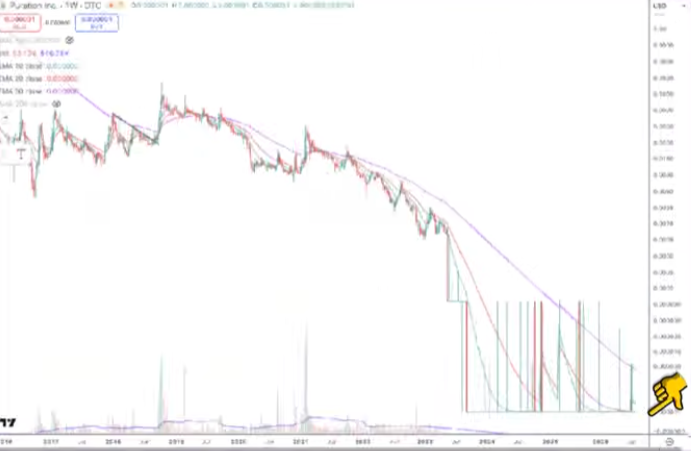
This example demonstrates why his strategy cannot be reduced to a simple chart pattern.
The chart was only one piece of the puzzle.
Scuttlebutt: Neumann’s Research Edge

A major component of Neumann’s approach is something often called scuttlebutt research.
Instead of relying exclusively on public financial statements, he actively investigates companies and industries.
His research has included:
Speaking with management
Meeting angel investors
Visiting shops
Talking to customers
Attending exhibitions
Investigating products personally
Following regulatory developments
This gives him a deeper understanding of the narrative behind a trade.
It also helps explain why he is sometimes willing to take unusually concentrated positions.
He is not simply trading a chart.
He is building a detailed investment thesis.
Identifying Themes Before the Crowd
Perhaps Neumann’s greatest skill is identifying emerging themes early.
The ethanol trade is one example.
CBD is another.
Crypto represents a broader example.
The principle is always similar:
Find a significant structural change before it becomes obvious.
In modern markets, an investor attempting to replicate this style might monitor:
Emerging legislation
Supply shortages
Technological breakthroughs
Regulatory approvals
New infrastructure spending
Major consumer trends
Structural industry changes
When multiple companies in the same niche suddenly begin showing momentum, that can provide an additional clue that capital is moving into the theme.
Modern Example: The Memory Shortage Theme

The script provides a more recent illustration using the memory industry.
As artificial intelligence investment accelerated, manufacturers redirected increasing production capacity towards high-bandwidth memory.
That created shortages elsewhere in the memory supply chain.
Signs of those shortages were reportedly visible well before the theme became universally recognised.
Large companies such as Micron and Sandisk benefited.
But smaller companies potentially offered considerably greater percentage upside.
One example was MRAM, a niche memory manufacturer with a market capitalisation around $130 million.
The stock was trading in a long-term downtrend before breaking above the declining trendline near $6.

As the memory shortage narrative gained momentum, the stock eventually advanced more than 800% in less than a year before retracing once the theme became excessively popular.
This is very close to the Four Corners concept:
Emerging sector theme
Hard industry catalyst
Small company
Crypto and Coinbase
Bitcoin provides another useful example.
Bitcoin broke above a long-term declining trendline in January 2023.
A major crypto breakout naturally has implications for companies whose businesses depend on cryptocurrency activity.

Coinbase was one such company.
It also broke through a long-term downtrend around the same period.
According to the examples in the script:
Bitcoin eventually produced roughly a 500% move.
Coinbase produced closer to 800%.
This demonstrates the potential advantage of identifying a broader theme and then finding the higher-beta equities most exposed to it.
Rather than trading the obvious asset, traders can sometimes find smaller or more leveraged beneficiaries of the same trend.
Concentration: The Engine Behind Neumann’s Returns
Stock selection alone does not explain Neumann’s exceptional long-term performance.
Position sizing matters enormously.
Neumann has sometimes allocated:
One-third of his account
Half of his account
to a single high-conviction theme or stock.
The mathematics are powerful.

Suppose one-third of an account is invested in a position that increases fivefold.
That position alone can transform overall portfolio performance.
If the remaining two-thirds of the account merely break even, the portfolio return can still exceed 100%.
A tenfold increase produces an even more dramatic effect.
This is how exceptional concentration can accelerate wealth creation.
But it also increases risk substantially.
The Risk of Concentrated Trading
There is an important distinction between understanding Neumann’s strategy and blindly copying his position sizes.
Concentration magnifies both:
Skill
Mistakes
A one-third position in a stock that collapses overnight can cause serious portfolio damage.
This becomes particularly relevant when dealing with micro-cap companies, where:
Liquidity may disappear.
Gap risk can be extreme.
News can move prices dramatically.
Trading can be halted.
Companies can fail completely.
Even Neumann’s CBD example eventually went to zero.
For that reason, any attempt to use this style requires strict risk management.
Stop Losses Still Matter
No matter how compelling the story appears, Neumann’s framework should still include a predefined invalidation point.

Possible exits include:
Price closing back below the broken trendline.
A significant swing low breaking.
The catalyst being invalidated.
New information damaging the original thesis.
The theme becoming excessively euphoric.
This is an important lesson.
Conviction should never become blindness.
If the facts change, the trade changes.
Knowing When to Sell
One of the most interesting elements of Neumann’s methodology is his willingness to sell when the story reaches the mainstream.
Neumann often thinks differently.
When:
Headlines multiply
Retail excitement explodes
The catalyst becomes universally known
Valuations become euphoric
He begins looking for the exit.
That philosophy can be summarised simply:
Buy the emerging story. Sell the popular story.
How Could Traders Apply the Four Corners Today?

Replicating Neumann’s exact strategy requires considerably more work than most swing trading systems.
A practical process might look like this:
1. Identify Emerging Themes
Look beyond mainstream market commentary.
Monitor areas experiencing:
Structural growth
Regulation changes
Supply shortages
Technological disruption
2. Find Smaller Beneficiaries
Focus on companies where the new theme could materially alter earnings or valuation.
3. Analyse Share Structure
Look for manageable share counts and limited dilution.
4. Wait for Technical Confirmation
A break above a long-term downtrend can provide evidence that market perception is changing.
5. Understand the Catalyst
Know exactly why the opportunity exists.
6. Define Risk Before Entry
Always determine where the thesis becomes invalid.
7. Monitor the Story
The catalyst can evolve.
Continue researching after buying.
How Neumann’s Strategy Differs From My Own
There are aspects of Jeffrey Neumann’s approach that I find fascinating, particularly the focus on emerging themes and technical inflection points.
However, his methodology requires substantial research, frequent monitoring and often aggressive concentration.
My own approach is considerably more passive.
I focus primarily on:
Weekly charts
Lateral consolidations
Quality fundamentals
Momentum
Defined breakout structures
Our bespoke scanner performs much of the initial stock selection automatically, allowing the entire process to be managed primarily over the weekend.
Different traders naturally gravitate towards different styles.
Neumann’s methodology suits someone prepared to conduct deep investigative research and concentrate heavily when conviction is high.
My own approach is designed around lower maintenance and systematic execution.
Neither philosophy needs to be universally superior.
The important question is:
Which one can you execute consistently?
Final Thoughts
Jeffrey Neumann’s trading career provides one of the clearest demonstrations of how adaptable traders can create extraordinary results.
His original market-making edge disappeared.
He did not complain that markets had changed.
He changed with them.
That evolution eventually produced the Four Corners framework:
Technical breakout
Clean share structure
Emerging sector
Hard catalyst
The individual components are relatively simple.
The difficulty lies in discovering opportunities where all four align before everyone else sees them.
His success also illustrates the extraordinary impact of concentration.
Finding a ten-bagger is valuable.
Finding a ten-bagger while holding a meaningful percentage of your portfolio can be transformational.
But that same concentration makes risk management essential.
The broader lesson from Jeffrey Neumann is therefore not simply to chase obscure micro-cap stocks.
It is to develop an edge, recognise when that edge changes, investigate opportunities more deeply than the average participant and become aggressive only when multiple independent factors align.
That is arguably one of the most valuable lessons any trader can learn.
Frequently Asked Questions
What is Jeffrey Neumann’s Four Corners strategy?
The Four Corners strategy requires four elements to align before entering a trade: a technical breakout, clean share structure, the right emerging sector or theme, and a hard catalyst.
Who is Jeffrey Neumann?
Jeffrey Neumann is a trader featured in Jack Schwager’s Unknown Market Wizards. According to the account covered in the script, he turned approximately $2,500 into more than $50 million while averaging around 80% annually over 17 years.
What technical setup does Neumann prefer?
He frequently looks for stocks breaking above long-term declining trendlines, often following one to five years of weakness.
Why does share structure matter?
A smaller number of shares and limited dilution can make it easier for increased demand to produce substantial percentage moves.
What does Neumann mean by a hard catalyst?
A hard catalyst is a specific event capable of materially changing a company’s prospects, such as legislation, partnerships, product adoption or industry shortages.
Does Jeffrey Neumann trade only micro-cap stocks?
His approach often focuses on small and micro-cap companies because they can respond dramatically to new themes and catalysts, although his broader thematic thinking can apply to larger companies as well.
Why is scuttlebutt research important to his strategy?
Neumann frequently gathers information by speaking with customers, retailers, management and industry participants, helping him understand a theme beyond publicly available financial data.
How concentrated are Neumann’s positions?
According to the examples in the script, he has sometimes committed one-third or even half of his account to a high-conviction opportunity.
Is Jeffrey Neumann’s strategy suitable for beginners?
The basic Four Corners framework is easy to understand, but replicating his methodology requires substantial research, experience, risk management and comfort with volatile smaller companies.
What is the biggest lesson from Jeffrey Neumann?
Perhaps the biggest lesson is adaptability. When his original trading edge disappeared, he developed a new framework rather than continuing to trade an obsolete strategy.
This article breaks down his strategy in detail, examines examples involving ethanol, CBD, memory stocks and crypto-related equities, and explains why his exceptional returns depended not only on stock selection, but also on concentration, timing and disciplined risk management.
For more on the Financial Wisdom approach:
Download the Free strategy PDF
Explore the Bespoke breakout scanner
Join the group where I share trades, portfolio management, and execution logic in real time
Those interested in a structured, rules-based approach can explore the Financial Wisdom Strategy Blueprint, available free, which outlines a complete framework refined over decades.

Related Reading
Inside the Financial Wisdom Weekly Consolidation Breakout Framework
Risk Management in Trading: The Foundation of Long-Term Profitability
Published by FinancialWisdomTV.com Trading Education | Risk Management | Trading Strategy | Trading Psychology



Comments