
A Simple Precious Metals Strategy That Beat Buy-and-Hold by 5× (With 70% Less Market Exposure)
Updated: 20 hours ago
A Simple Precious Metals Strategy That Beat provides a useful framework for turning market observations into repeatable trading decisions. This updated guide preserves the original Financial Wisdom material while adding clearer rules, evidence checks and risk controls.
A Simple Precious Metals Strategy That Beat: In This Guide
Key lessons and practical rules
The original Financial Wisdom guide and media
Evidence, limitations and risk controls
Frequently asked questions
Related guides and authoritative sources
Key Takeaways
Define the setup, trigger and invalidation level before entering.
Confirm signals with price, volume and the wider market context.
Test complete rules across different regimes and include trading costs.
Size every trade so one failed setup cannot materially damage the account.
Original Financial Wisdom Guide
Follow the trend to avoid opportunity cost.
Summary:
This article explains a simple, rules-based precious metals strategy that historically captured up to 95% of gold and silver’s long-term returns while being invested for less than one-third of the time. Using monthly MACD and RSI signals, the strategy enters only during strong, confirmed trends and exits when momentum is exhausted. Over 50 years, it produced CAGRs up to 4–5× higher than buy-and-hold during invested periods, with lower drawdowns and significantly reduced opportunity cost. The approach is passive, requires very few decisions, and can be automated using alerts, making it suitable for long-term investors seeking diversification, capital efficiency, and disciplined exposure to precious metals.
Download our FREE trading strategy for a similar trading principle used for stocks:

The Gold & Silver Strategy:
We explore a robust, rules-based investment strategy for precious metals that has historically outperformed a traditional buy-and-hold approach by as much as five times, while keeping investors exposed to the market for less than one-third of the time.
What makes this approach especially compelling is its simplicity. The strategy can be executed passively, requires very few decisions, and relies on basic technical indicators applied to monthly charts. Over a 50-year period, it would have required action on just seven occasions.
Let’s break down how it works, why it works, and what the numbers actually show.
Practical Checkpoint
Define the setup, entry and invalidation level before acting.
Compare the potential payoff with risk-reward planning.
Set the trade size using consistent position-sizing rules.
Long-Term Performance of Gold and Silver
Before diving into the strategy, it’s important to establish the baseline.
Over the past 50 years:
Gold delivered a total return of approximately 3,250%, equivalent to a 7.3% CAGR

Silver returned roughly 1,733%, or about a 6% CAGR

These are respectable long-term returns, but they came with very long periods of stagnation and severe drawdowns, particularly in silver.
The strategy outlined here captures most of the upside, while dramatically reducing time spent in the market and exposure during unfavourable periods.

Strategy Results vs Buy-and-Hold
Gold
$10,000 invested in gold in 1976 via buy-and-hold → ~$336,000
Using the timing strategy → ~$313,000
Time invested: ~14 years out of 50 (72% less exposure)
CAGR during invested periods: ~28% per annum
Strategy captured ~90% of buy-and-hold returns
Members in our group are currently still riding the gold bull run that began in March 2023, sitting on more than a 100% gain so far.

Silver
$10,000 buy-and-hold → ~$183,000
Timing strategy → ~$174,800
Time invested: ~23% of the total period
CAGR during invested periods: ~30% per annum
Return capture: ~95% of buy-and-hold
In both metals, the strategy achieved near-identical terminal wealth while avoiding decades of dead money.

The Core Philosophy: Buy Strength, Exit Exhaustion
This is not a prediction-based strategy.
It is designed to:
Evidence Check
Is the sample broad enough to include difficult markets?
Do the results include spreads, fees, slippage and failed signals?
Could hindsight, survivorship or selective examples explain the result?
Enter only when a trend begins with strength
Stay invested while the trend remains healthy
Exit decisively when momentum is exhausted

The strategy avoids:
Bottom-fishing
News-driven decisions
Emotional entries
Overtrading
Everything is rule-based.
Indicators Used (Monthly Timeframe Only)
The strategy uses just two indicators, applied to monthly charts:
MACD – to define the trend
RSI – to confirm trend strength
No intraday charts. No discretion. No optimisation.

Entry Rules (Gold & Silver)
A long position is entered only when both conditions occur in the same month:
MACD bullish crossover
MACD line crosses above the signal line
RSI confirms strength
RSI must be above 55
If the MACD crossover occurs but RSI is below 55 → no trade If RSI rises above 55 months later → still no trade
No confluence = no position.
The trade is entered at the open of the following month, slightly above the prior close.

Exit Rules
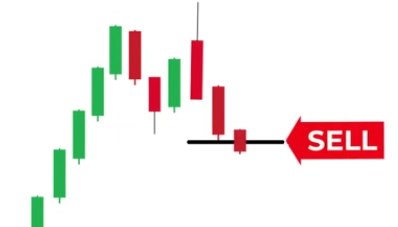
Wait for a bearish MACD crossover
Mark the low of the crossover month
Exit when price breaks below that low
This avoids emotional exits and ensures trends are allowed to mature fully.
Historical Example: Gold in the 1970s
Entry: February 1977
MACD bullish crossover
RSI at 55.6 (above threshold)
Exit: December 1980
MACD bearish crossover
Exit triggered when price broke below $539

Result:
Price increased nearly 4×
Trend captured for ~4 years
Capital protected when momentum failed
A later MACD crossover in 1982 was ignored because RSI was below 55—even though price later rallied. This discipline is critical to the strategy’s long-term edge.
Time Compression: The Real Advantage
When all valid strategy periods are stacked together:
Buy-and-hold required 50 years
Strategy required ~14 years
Opportunity cost saved: ~35 years
The result is similar terminal wealth with far superior capital efficiency.

Drawdowns: Strategy vs Buy-and-Hold
Gold
Buy-and-hold max drawdown: ~71%
Strategy max drawdown: ~48%
Excluding 1980s crash:
Buy-and-hold: ~45%
Strategy: ~25%
Silver
Buy-and-hold drawdown: ~92%
Strategy drawdown: ~78%
Excluding extremes:
Buy-and-hold: ~76%
Strategy: ~47%

Drawdowns remain meaningful, which is why leverage must be used cautiously, especially in silver. Gold’s lower volatility makes it marginally more suitable if leverage is considered at all.
Portfolio Application
Precious metals work exceptionally well as:
A diversifier
A risk-off hedge
A non-correlated return stream

A 10–20% allocation to this strategy can materially improve portfolio stability and long-term returns, particularly for investors with a largely passive approach.
Discipline Is the Strategy
This approach works only if the rules are followed exactly:
Enter only on valid signals
Exit only when the system says so
Ignore headlines and social media
Accept that missed moves are part of the process
By the time a move becomes popular, the risk-reward is usually gone.
The first video we created on the Gold approach can be seen here, BEFORE the recent bull run even began:
Final Thoughts
This precious metals strategy demonstrates a powerful truth:
You don’t need to be invested all the time to achieve strong long-term returns.
By focusing on trend confirmation, strength, and discipline, you can:
Capture most of the upside
Avoid long drawdowns
Reduce opportunity cost
Improve capital efficiency dramatically
Simple rules. Long timeframes. No emotion.
That combination is far rarer—and far more effective—than it looks.
If you want to see our stock trading approach built on similar approaches.:
Download the Free strategy PDF
Explore the Bespoke breakout scanner
Join the group where I share trades, portfolio management, and execution logic in real time
Those interested in a structured, rules-based approach can explore the Financial Wisdom Strategy Blueprint, available free, which outlines a complete framework refined over decades.

Related Reading
Inside the Financial Wisdom Weekly Consolidation Breakout Framework
Risk Management in Trading: The Foundation of Long-Term Profitability
Frequently Asked Questions (FAQs)
1. What is the core idea behind this precious metals strategy?
The strategy aims to capture major long-term trends in gold and silver while avoiding prolonged drawdowns. It does this by entering only during strong, confirmed trends and exiting when momentum shows clear signs of exhaustion, rather than holding through multi-year declines.
2. Which indicators does the strategy use?
The strategy uses two simple technical indicators on monthly charts:
MACD to identify trend direction and trend exhaustion
RSI to confirm trend strength and filter out weak or false signals
No additional indicators or discretion are required.
3. Why are monthly charts used instead of daily or weekly charts?
Monthly charts reduce noise, false signals, and emotional decision-making. They align well with macro-driven trends in precious metals and require very few actions—only a handful of trades over several decades—making the strategy suitable for passive investors.
4. What are the exact entry rules?
A trade is entered when:
The MACD line crosses above the signal line on a monthly chart, and
The RSI is above 55 in the same month
If these conditions do not occur together, the trade is skipped.
5. How are exits handled?
An exit is triggered when:
The MACD crosses below the signal line
The low of the crossover month is marked
The position is exited when price breaks below that low in a subsequent month
This prevents premature exits while protecting against major trend reversals.
6. How often does the strategy trade?
Very infrequently. Over 50 years, the strategy required action on fewer than 10 occasions for each metal. This low activity helps minimise costs, errors, and emotional interference.

7. Does this strategy outperform buy-and-hold?
Historically, the strategy captured 90–95% of buy-and-hold returns while being invested for 70–80% less time. During invested periods, the annualised returns were significantly higher due to reduced idle time and improved capital efficiency.
8. What kind of drawdowns should be expected?
Drawdowns are lower than buy-and-hold but still meaningful:
Gold: ~48% vs ~71% for buy-and-hold
Silver: ~78% vs ~92% for buy-and-hold
Because drawdowns can still be large, conservative position sizing is essential.
9. Can this strategy be automated?
Yes. Because it uses monthly signals and simple rules, the strategy can be fully automated using alerts or trading platforms that support MACD and RSI conditions. Manual chart monitoring is not required.
10. Is leverage suitable for this strategy?
Leverage should be used with extreme caution. Even with improved timing, drawdowns can be substantial, particularly in silver. Gold is generally more suitable than silver if leverage is considered due to lower volatility.
11. Is this strategy suitable for beginners?
Yes, provided the rules are followed strictly. The simplicity, low trade frequency, and long-term focus make it easier to execute than many active trading strategies—but discipline is essential.
12. How does this strategy fit into a broader portfolio?
The strategy works well as a 10–20% portfolio allocation, offering diversification and a hedge during equity drawdowns or risk-off environments, without requiring active management.
13. What is the biggest mistake traders make with this approach?
The most common mistakes are:
Entering without RSI confirmation
Acting on news or emotions instead of signals
Exiting early during normal volatility
Overusing leverage
Following the rules consistently is more important than optimising returns.
Published by FinancialWisdomTV.com Trading Education | Risk Management | Trading Psychology
Practical Limitations
Historical examples, interviews, backtests and indicator results are educational illustrations rather than forecasts. Outcomes depend on the market, timeframe, data, transaction costs, financing, taxes and execution assumptions. Test complete rules across varied conditions and define the maximum acceptable account risk before taking a position.
Put This Into Practice
These ideas become more useful when selection, entry, stop placement, position sizing and trade management form one repeatable process. The Financial Wisdom Trading Blueprint connects those decisions in a practical weekly framework.

Further Reading
References and Further Reading
Educational information only. Trading and investing involve risk, including the possible loss of capital. Examples are illustrative, not guarantees of future performance, and nothing in this article is personalised financial advice.
About the Author
Written by Gareth, MBA
Gareth, founder of Financial Wisdom, has more than 30 years of personal trading experience. He competes in the United States Investing Championship, creates award-winning trading content and has been featured in Technical Analysis of Stocks & Commodities.


Ik ben blij met de helderheid en diepgang van dit stuk. De gesprekken over interactieve digitale diensten en hun gebruikersgerichte kenmerken zijn interessant. Op de website is er extra informatie over dit onderwerp te vinden. De voorbeelden die zijn gegeven, versterken het algemene begrip van het onderwerp.